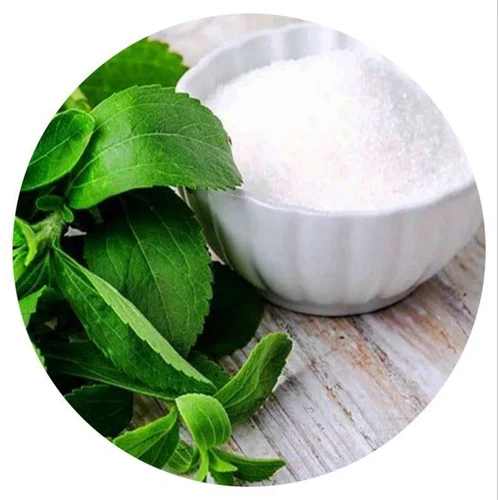
Stevia is a zero-calorie, plant-derived sweetener extracted from the leaves of the Stevia rebaudiana shrub, which is native to South America. The sweet compounds, known as steviol glycosides, are highly concentrated and can be 200–400 times sweeter than table sugar.
SWEETENERS
Stevia
Physical & Chemical properties
Key Physical Properties
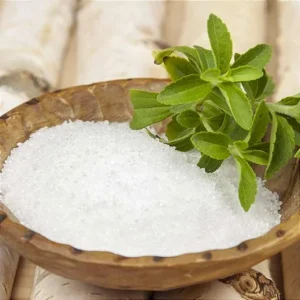
- Appearance: Stevia extracts are typically white, crystalline powders.
- Solubility: The water solubility of different steviol glycosides ranges, but they are soluble enough for practical use in beverages.
- Structure: They are glycosides, meaning they have a sugar component (glucose) attached to an aglycone (steviol).
- Sweetness: Steviol glycosides are 50 to 300 times sweeter than table sugar (sucrose).
Key Chemical Properties
-
Chemical Composition:The primary active compounds are steviol glycosides, such as stevioside and rebaudioside A.
-
Stability:
- Heat-Stable: Stevia extracts can withstand high temperatures without degrading, allowing for their use in cooking and baking.
- pH-Stable: They maintain their stability and sweetness over a broad pH range, particularly from pH 4 to 8, which is suitable for most foods and drinks.
- Heat-Stable: Stevia extracts can withstand high temperatures without degrading, allowing for their use in cooking and baking.
Application
Stevia can be used to sweeten a variety of foods and drinks but can have a licorice-like or bitter aftertaste at high concentrations.
- Beverages: Used in coffee, tea, and zero-calorie soft drinks.
- Baking: Can be used in place of sugar, but it does not provide the bulk, browning, or texture that sugar does. Specialized baking blends or recipes may be necessary.
- Other foods: Found in products such as yogurts, sauces, chewing gum, and desserts.
Packaging
• 25 kg bags
• 50 lbs
• FIBC
Minimum of 24 months
after date of production,
in closed packing. Best
before expiration date
on packaging.
Reviews
There are no reviews yet.